

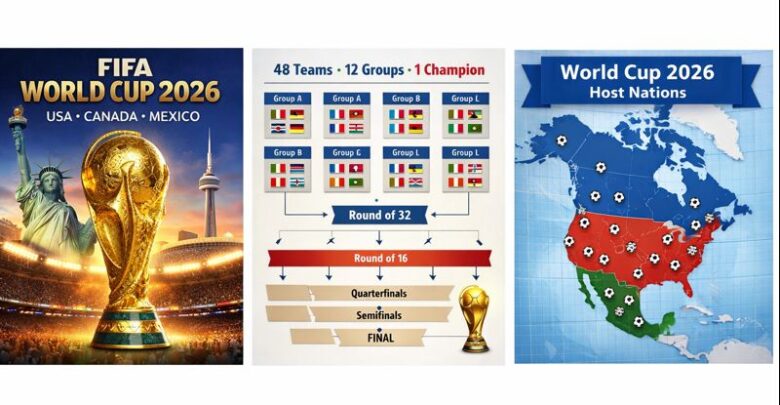
The FIFA World Cup 2026 is shaping up to be the largest, most ambitious, and most transformative World Cup in football history. For the first time, the tournament will be hosted by three countries simultaneously — the United States, Canada, and Mexico — and for the first time, 48 national teams will compete for football’s most coveted prize.
Beyond its expanded scale, World Cup 2026 represents a strategic shift by FIFA: expanding football’s global footprint, maximizing commercial reach, and embedding the sport deeper into North America’s sporting culture. With unprecedented logistics, record-breaking attendance projections, and historic competitive changes, the 2026 World Cup is more than just another edition — it is a turning point.
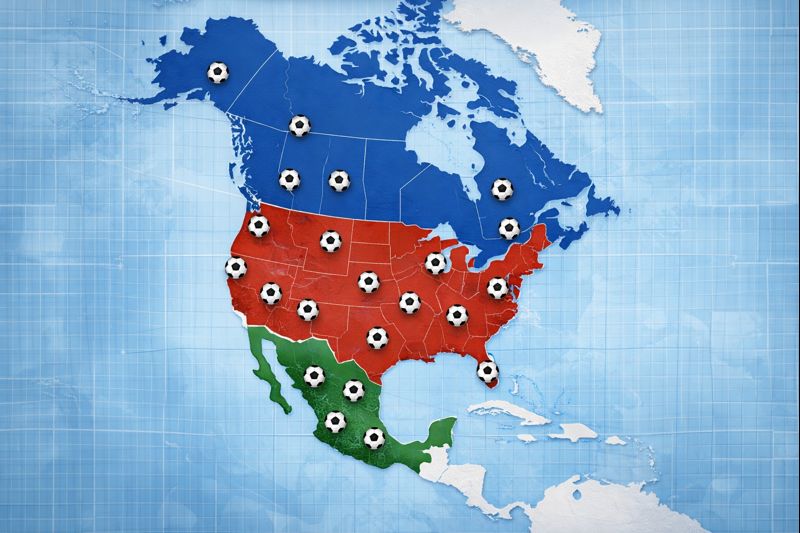
World Cup 2026 Host Countries: A Historic Trilateral Event
United States, Canada, and Mexico — A First in World Cup History
The FIFA World Cup 2026 will be jointly hosted by:
- United States
- Canada
- Mexico
This marks:
- The first three-nation hosted World Cup
- Mexico becoming the first country to host the World Cup three times (after 1970 and 1986)
- Canada hosting its first men’s FIFA World Cup
- The United States hosting again after 1994, which remains one of the most commercially successful tournaments ever
Match Distribution
- United States: Majority of matches, including the final
- Mexico: Group stage matches
- Canada: Group stage matches
The model allows FIFA to leverage North America’s infrastructure while minimizing political and economic risk.
FIFA World Cup 2026 Venues and Cities
The tournament will be staged across 16 host cities, making it the most geographically widespread World Cup ever.
United States Host Cities (11)
Including major football and commercial hubs such as:
- New York/New Jersey
- Los Angeles
- Dallas
- Miami
- Atlanta
- Seattle
Canada Host Cities (2)
- Toronto
- Vancouver
Mexico Host Cities (3)
- Mexico City
- Guadalajara
- Monterrey
These venues are selected for:
- Existing world-class stadiums
- Transport infrastructure
- Accommodation capacity
- Commercial viability
A New Format: 48 Teams, More Matches, More Drama
Expansion from 32 to 48 Teams
World Cup 2026 will feature:
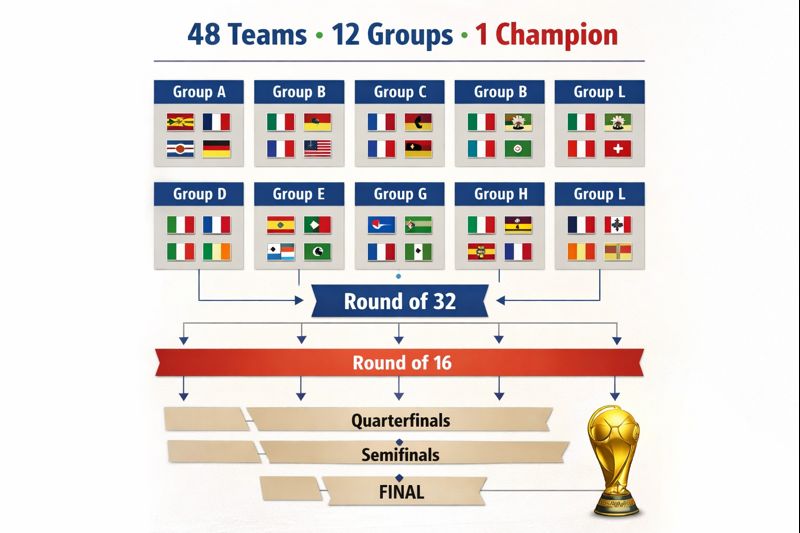
- 48 national teams
- 104 matches (up from 64)
- A longer tournament duration
This expansion significantly increases global representation, especially for:
- Africa
- Asia
- CONCACAF
- Smaller footballing nations
Group Stage Format
- 12 groups of 4 teams
- Top teams advance to a Round of 32
- Followed by traditional knockout rounds
This ensures:
- Fair competition
- Fewer dead matches
- More high-stakes games
World Cup 2026 Qualification: The Tough Road to North America
Qualification for the FIFA World Cup 2026 is already underway across all FIFA confederations.
Key Qualification Changes
- More slots for every region
- Increased chances for emerging football nations
- Still highly competitive in Europe and South America
Why Qualification Still Matters
Despite expansion, qualification remains brutal:
- Traditional powers face pressure to adapt
- Smaller nations see historic opportunities
- Tactical discipline matters more than ever
For many countries, reaching the World Cup finals is itself a national achievement.
FIFA World Cup 2026 Schedule: What We Know So Far
- Opening match: June 2026
- Final: July 2026 (United States)
- Duration: Approximately one month
The summer schedule ensures:
- Maximum global television audiences
- Alignment with European football calendars
- Peak tourism season for host nations
Economic and Political Significance of World Cup 2026
Economic Impact
The 2026 World Cup is expected to generate:
- Tens of billions of dollars in economic activity
- Massive tourism inflows
- Job creation across hospitality, transport, and security sectors
Political and Soft Power Impact
Hosting the World Cup allows:
- Showcasing stability and openness
- Strengthening diplomatic ties
- Enhancing national branding on a global stage
For North America, the tournament is also a statement of organizational capacity and unity.
World Cup 2026 and Football’s Growth in North America
One of FIFA’s strategic goals is clear: make football the dominant global sport in North America.
Expected Long-Term Effects
- Growth of youth academies
- Expansion of domestic leagues
- Increased football participation
- Commercial sponsorship boom
- Media rights growth
The 1994 World Cup transformed soccer in the US. 2026 is expected to multiply that effect several times over.
Key Storylines to Watch at FIFA World Cup 2026
1. Can Traditional Powers Adapt to Expansion?
Large squads, rotation, and recovery will be critical in a longer tournament.
2. Will Underdogs Go Further Than Ever?
More teams mean more tactical surprises and Cinderella runs.
3. A New Generation Takes Over
World Cup 2026 is expected to be:
- A final World Cup for some global stars
- A breakout moment for a new generation
4. Tactical Evolution
Expect:
- High-press systems
- Flexible formations
- Data-driven decision making
- Squad depth over individual brilliance
Technology and Innovation at World Cup 2026
FIFA plans to expand use of:
- Advanced VAR systems
- Semi-automated offside technology
- Enhanced broadcast analytics
- Fan engagement technology in stadiums
The aim is accuracy, transparency, and fan immersion.
The World Cup Trophy: The Ultimate Prize Still Unchanged
Despite format changes, the prize remains the same:
- The iconic FIFA World Cup Trophy
- A symbol of global football supremacy
- A legacy that defines players and nations forever
Winning the World Cup in 2026 will carry extra prestige due to:
- Larger field
- More matches
- Greater global scrutiny
Why FIFA World Cup 2026 Matters More Than Ever
The FIFA World Cup 2026 is not just about football matches. It represents:
- Globalization of the sport
- A shift in football geography
- Greater inclusivity
- Commercial evolution
- Cultural convergence
For fans, it promises more football, more stories, and more unforgettable moments.
Frequently Asked Questions (FAQ) – FIFA World Cup 2026
When is the FIFA World Cup 2026?
It will be held in June–July 2026.
Which countries are hosting World Cup 2026?
The United States, Canada, and Mexico.
How many teams will play in World Cup 2026?
48 national teams, the largest ever.
Where will the final be played?
The final will be hosted in the United States.
What is new in World Cup 2026?
A 48-team format, more matches, expanded global representation, and three host nations.
Conclusion: A World Cup for a New Era
The FIFA World Cup 2026 stands at the intersection of tradition and transformation. While the essence of the World Cup — national pride, football excellence, and global unity — remains unchanged, everything else has evolved: scale, format, geography, and ambition.
As the countdown continues, one thing is certain: World Cup 2026 will not just crown a champion — it will redefine how the world experiences football.
