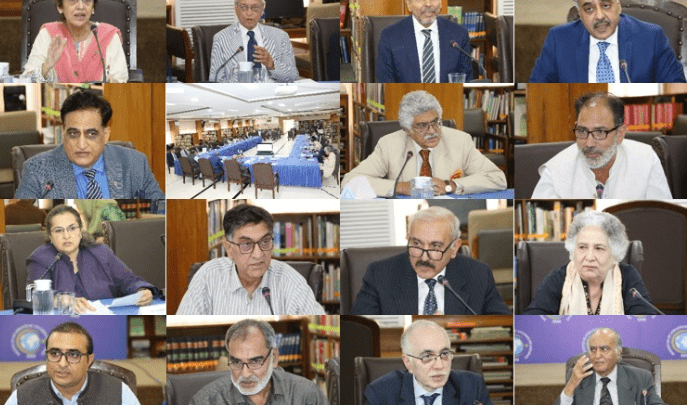
On July 13 the India Study Centre (ISC) at the Institute of Strategic Studies Islamabad (ISSI) recently convened a roundtable titled “Modi 3.0 – What to Expect Regarding Pakistan-India Relations?” The discussion, attended by senior diplomats, academics, think-tank heads, journalists, and area specialists, focused on analyzing future policy directions under Prime Minister Narendra Modi’s third term and considering strategic options for Pakistan.
The consensus among the panelists was that given the current post-election landscape in India, led by the BJP-led NDA government, no significant breakthrough in India-Pakistan relations should be anticipated. They pointed to the BJP leadership’s anti-Pakistan stance during the recent election campaign and continued harsh rhetoric against Pakistan on the international stage. The panel noted that with the retention of the existing security and foreign policy team, New Delhi was unlikely to shift its stance or seek positive advancements in bilateral relations.
Panelists cautioned that Pakistan’s expressions of willingness to engage in dialogue with India could be misinterpreted as a sign of weakness. They emphasized that while Pakistan should remain open to constructive engagement, the responsibility to create a conducive environment for meaningful dialogue rested primarily with India. They recommended exercising ‘strategic patience’ and advocated for Pakistan to maintain its stance on promoting good-neighbourly relations based on mutual respect, sovereignty, and peaceful resolution of disputes, particularly emphasizing Pakistan’s principled position on Jammu and Kashmir.
Regarding policy options, panelists underscored the importance for Pakistan to focus on its national development goals, including ensuring a peaceful external environment, resolving issues in Pakistan-Afghanistan relations, enhancing relations with Iran and Central Asian countries for economic integration, and strengthening partnerships with major global powers including the US, Russia, and China. They highlighted the upcoming term as an elected member of the United Nations Security Council (2025-26) as an opportunity for Pakistan to further its foreign policy objectives and contribute to global peace and security.
In conclusion, the roundtable emphasized Pakistan’s strategic imperatives amidst the evolving dynamics of South Asian geopolitics, advocating for a balanced approach that prioritizes national interests while fostering regional stability and international cooperation.